How to build an effective sales funnel for your e-commerce business?


What is a sales funnel?
A sales funnel is a process that companies use to reach potential customers and transform them into actual clients. The funnel is designed to guide prospects through a journey that begins with building awareness and ends with a purchase.
The sales funnel starts with marketing activities that create awareness of a company’s products or services. Once a potential customer is aware of the company’s existence, they begin to consider it as a solution to their problem by purchasing a product or using a service.
As the potential customer continues their journey, they will move through subsequent stages of the funnel, from consideration to decision-making. At the decision stage, the prospect determines whether they want to buy the product or service.
A sales funnel is a valuable tool for businesses because it helps track the progress of potential customers and identify where bottlenecks may occur within the funnel. This information can be used to adjust the marketing strategy to make the journey down the sales funnel as easy as possible for the target audience.
The difference between B2B and B2C funnels
The main difference between a B2B and a B2C sales funnel is the type of customer each one targets. A B2B sales funnel is aimed at businesses, while a B2C sales funnel is directed at individual consumers. The primary distinction between these two types of sales funnels lies in the type of content used. For example, a B2B sales funnel often employs more technical language and is targeted at a more specific audience, whereas a B2C sales funnel uses more general language and targets a broader audience.
Stages of the sales funnel
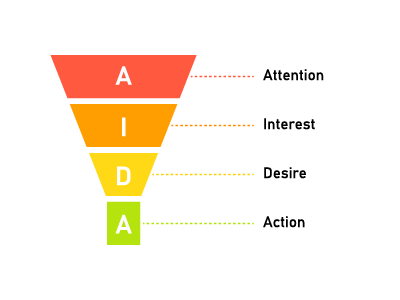
When building a sales funnel, there are several key things to keep in mind:
- Ensure your website is optimized for search engines. This will help users find you when searching for keywords related to your business.
- Use social media to drive traffic to your website. By sharing your content on social media, you can reach a wider audience and attract users to your site.
- Use effective calls to action. Your call to action should be clear and concise, and it should specify exactly what you want your audience to do.
- Offer something of value. If you are encouraging users to buy from you, you must offer them something they want or need. Remember that a product or service description alone is not enough. Make sure to convince the potential customer that your offer meets their specific needs.
AIDA Model
- Awareness
- Interest
- Desire
- Action
1. Awareness
If you want to create a sales funnel for your e-commerce business, the first step is building brand awareness. Potential customers must first learn about your company’s existence before they can consider purchasing services or products that might solve their problems. The best way to achieve this is by creating content that educates them about your product or service and its benefits. Once you have captured their attention, you can start working on converting them into leads by encouraging them to provide their contact information. Then, you can move them down the funnel by nurturing them with additional content and ultimately selling them your product or service.
- Content marketing — Building a sales funnel with content marketing starts with creating content that resonates with your target audience. You need to produce content that directly addresses the needs and problems of your potential customers. Your content should be helpful and provide expert information, but it should also be entertaining and engaging if such communication fits your audience’s needs. If you manage to capture your audience’s attention and keep them engaged, you have a better chance of turning them into returning customers.
- Social media — Creating high-quality content and publishing it on social media platforms such as Facebook, LinkedIn, or Instagram will certainly contribute to increasing your brand recognition. This stems from the fact that people enjoy sharing experiences and opinions, and social media is the perfect platform for that. When leveraging this, remember to be original. Your content should stand out from that of your competitors.
- Online advertising — Thanks to extensive targeting options, ads like Google Ads or PPC (Pay Per Click) are among the fastest and most precise ways to increase brand awareness. While these can be relatively expensive solutions, a well-optimized paid campaign can deliver a significant return on investment.
- Influencers — In many industries, such as fashion, this is a necessity. By leveraging an influencer’s followers on Facebook, Instagram, or TikTok, you can quickly promote your products or services at a relatively low cost.
- SEO (Search Engine Optimization) — SEO can be used to support various stages of the sales funnel by improving a website’s visibility and ranking for relevant search terms. This can help attract potential customers to the site and assist in converting them into actual clients.
2. Interest

At this stage of the sales funnel, we must encourage the user who has arrived at our site to explore our offer and move toward a purchasing decision. However, before a potential customer makes a purchase, we should meet several basic requirements.
- Trust — To build trust with a visitor to our e-commerce site, the page should be equipped with several essential elements:
- Reviews from satisfied customers.
- Trust seals — security certificates such as SSL, which certifies digital protection against threats like phishing (the theft of critical data such as passwords, credit card numbers, etc.).
- Basic company information. Without these details, we will not inspire confidence in the potential customer, which ultimately makes them reluctant to entrust us with their data. Any doubt at this stage pushes potential clients further away from a purchasing decision.
- Quality content — If you want to refine your sales funnel and build the trust of potential customers, providing high-quality content is key. Your content should be comprehensive and answer any questions a prospect might have. Additionally, good product photos will help reduce any concerns the customer may have about making a purchase. To ensure your content is converting, it is worth conducting regular A/B tests and optimizing your content on an ongoing basis.
- Intuitive navigation — A well-designed website is key to increasing sales and building the trust of potential customers. By providing easy navigation and a logical breakdown of categories, you can help customers find the products they are interested in quickly and efficiently. This not only shortens the purchasing process but also increases the likelihood of closing the sale.
3. Desire

At this stage of the funnel, a common problem in e-commerce is unfinalized purchases in the form of abandoned carts. What can be done to increase the chances of leading the decision to a favorable conclusion?
- Up-selling and cross-selling — Before the transaction is completed, we can offer a more expensive (higher quality) product or a complementary one (something that supplements the item currently being viewed, e.g., a camera – memory card or an extra battery). We can also present a promotional price for purchasing several specific products (e.g., books by the same author or in the same field). This technique is frequently used by Amazon.
- Remarketing — For customers who have visited our site but have not yet made a purchasing decision, we can reach out to them again later, for example on social media, through remarketing activities.
- Promotions — To motivate potential customers, information about promotions and discounts, especially limited-time offers, should be placed in a visible spot on the website.
- Convenient payment methods — The more quick payment methods we provide, the less resistance we will encounter from customers, which translates into more purchasing decisions.
- Cost transparency — Nowadays, hiding or withholding information about fees, such as shipping costs, until the very end of the checkout process can be poorly received. It pays to be fair to our customers from the very beginning, and they will remain loyal to us.
4. Action

A customer who has already trusted us once is more likely to return. Therefore, it is extremely important to maintain good relationships with your customers.
There are several key ways to build customer loyalty:
- Keep your promises. If you say you will do something, make sure you do it. This builds trust and shows that you are reliable.
- Be responsive. If your customers have questions or concerns, ensure you respond in a timely manner. This shows that you care about their experience and want them to be satisfied.
- Offer discounts and rewards. Customers like to feel they are getting a good deal. Offering discounts or loyalty rewards – best communicated via social media or mailing lists – can keep customers coming back.
- Show appreciation. A simple thank you can go a long way. Showing customers that you appreciate their purchase is a great way to build loyalty.
Building customer loyalty is essential for the success of your business. By following these tips, you can create long-lasting relationships that benefit both you and your customers.
Characteristics of audiences at different funnel stages
- Top of the funnel (ToFu) audience — These users are usually more aware of their problem but less aware of potential solutions. They are also more open to new ideas and less price-sensitive.
- Middle of the funnel (MoFu) audience — This group is characterized by being more aware of potential solutions but less aware of the specifics of each option. They are also more likely to be price-sensitive and look for more detailed information about each choice.
- Bottom of the funnel (BoFu) audience — These users are more aware of the details of each option and are likely ready to make a purchase. They are also less price-sensitive and are looking for the best value for their money.
Lead classification
A lead is a person who potentially expresses interest in your service or product. By definition, a user becomes a sales lead when they contact the company and leave their details, for example, by filling out a contact form on the website.
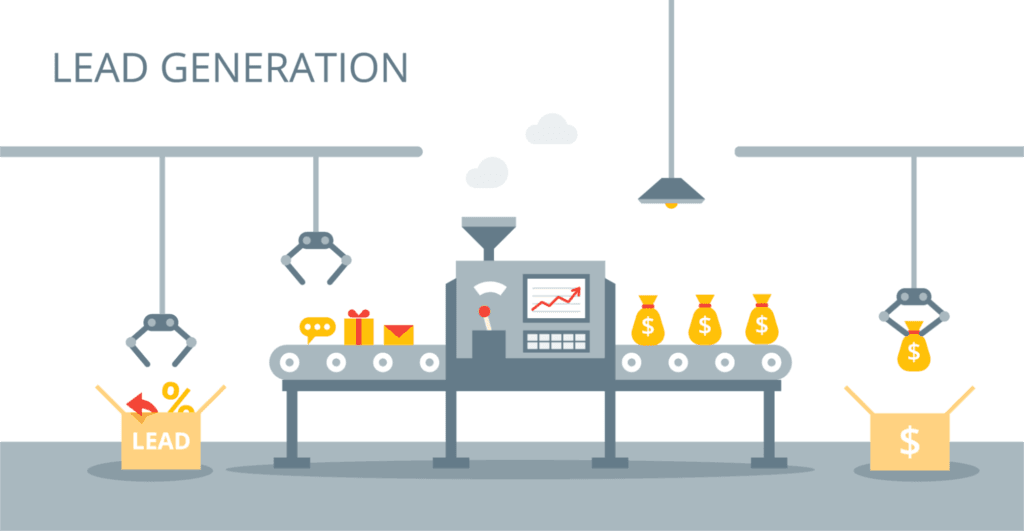
Lead generation refers to all intentional activities designed to pique interest in a company’s product or service offering that lead to customer acquisition. To evaluate the attractiveness of leads, three categories are used:
- Hot leads — These are users who are ready to purchase the offered product or service and must be handled as quickly as possible. We can easily lose such a lead if we do not react fast enough.
- Warm leads — These are users interested in our service or product, but they require specific marketing activities intended to “warm them up” to the status of a hot lead.
- Cold leads — These are users who are not yet interested in our offer but could potentially be in the future.
Marketing funnel optimization
If you want to increase online sales, you must focus on optimizing your marketing funnel. By understanding how customers move through your sales funnel, you can identify areas for improvement and implement changes that will increase your conversion rate.
Building a marketing funnel that converts can be a challenge, but it is well worth the effort. By understanding your customers and their needs, you can create a marketing funnel that guides them to your online store and encourages them to make a purchase.
To optimize your sales funnel, start by defining your target audience. Next, create content that resonates with them and prompts them to visit your website. Once they are on your site, make it easy for them to find what they are looking for and ensure that purchasing your products or services is a seamless experience.
By focusing on sales funnel optimization, you can increase online sales and achieve your business goals—which simply means earning more.
Summary
Sales funnels are an essential part of any sales process because they turn a regular user into a customer. Building an effective sales funnel requires time and effort, but it is indispensable for the success of your e-commerce business.
By taking the time to understand your target audience and creating a funnel that speaks to them, you will be able to increase your conversion rates and grow your brand.



More than 9 years on the market, hundreds of successful projects
Most of our clients hire us because they need a new online store. However, they stay with us because they find in WebCrafters a reliable technology partner, supporting them comprehensively from the tech side.
We are not a software house. We are your outsourced IT department that will take care of your business just like an in-house team of programmers, designers, and project managers would.
Build your new product with us!
Make an appointment for a free consultation with an expert and let's talk
about your expectations.
Write to us!
Or call

Mateusz Lenicki
CEO
Phone: +48 510 775 352
Email: [email protected]