How to start a profitable online store? 7 tips you need to know


In this day and age, simply having an e-commerce store and a product is no longer enough to succeed. Many businesses in this sector are quickly hit by a reality check. Success in this industry requires building a professional online store powered by the latest technological innovations, followed by consistent promotion. In this article, you will learn step-by-step how to create a profitable e-commerce business. Enjoy the read!

Online Store Idea — What to Sell?
Before launching your dream e-commerce business, just as with any other venture, you must first conduct a thorough analysis of the competition and the market. This first step is particularly crucial, given the sheer number of diverse stores and sales profiles out there. This saturation makes standing out an ever-increasing challenge.
The easiest way to start is by asking yourself a few fundamental questions:
- Are there companies offering a similar product? If so, how will your online store differ?
- Is the market perhaps oversaturated with the products you want to sell?
- Are you the manufacturer of the product or just a middleman?
- Is there sufficient market demand for your product?
- Who is your target customer? (Create a Customer Persona—listing their needs, fears, doubts, demographics, and other factors that will influence their future purchasing decisions).
At this stage, Google Trends can come to your rescue, along with reliable market reports and data. Of course, if your conceptual work is already done, it’s time to move on to the more technical aspects of setting up an online store.
What Do You Need Before Launching Your E-commerce?
In this section, you will find practical information on the essential elements required to build your own online shop.
Ready-made Template or Custom Design?
At the beginning of your journey, we suggest using ready-made online store templates. This solution allows you to save money, which can be highly beneficial during the startup phase. Once you reach a secure financial threshold—meaning you know your idea is successful—you can consider a custom store design to compete with the bigger players on the market.
Choosing the Right Domain
Choosing a domain can be tricky, as most catchy names are already taken. Simply put, a domain is the address where your store lives on the Internet. Ideally, the name should match your company or product name, or at least be closely associated with it. It should also be memorable. Many companies offer domains for as little as $0 (or 0 PLN) for the first year, but renewal can be very expensive. It pays to find a provider with more affordable long-term renewal rates.
Hosting
Hosting allows your online store to be placed on a web server. The server’s capacity, transfer speed, and bandwidth should be proportional to the size of your store. It is vital that your online store is reliable and remains functional even during sudden spikes in visitor traffic.
Data Security
SSL (Secure Sockets Layer) is a protocol used to secure network connections. An SSL certificate ensures the confidentiality of data transmitted over the internet.
Benefits of having an SSL certificate:
Protection against Phishing: This is the practice of impersonating a website to obtain sensitive user information, such as passwords or credit card numbers. An SSL certificate confirms that a site is trustworthy.
Positive Impact on SEO: Google rewards sites with SSL certificates with higher rankings in search results, which leads to more traffic and, ultimately, higher revenue.
GDPR Compliance: These regulations mandate the encryption of personal data, a requirement that an SSL certificate fulfills.
Support for HTTP/2: The HTTP/2 protocol significantly improves page loading speeds, which enhances UX (User Experience). It is only available for sites with an SSL certificate.
Website Credibility: Increasing your site’s credibility directly impacts sales performance, as internet users are becoming increasingly aware of online security threats.
Which platform should you choose? Types, pros, and cons
The type of software—or e-commerce platform—you choose can determine the ultimate success of your online store. Therefore, it is crucial to select one that perfectly aligns with your specific needs. The following options are available:
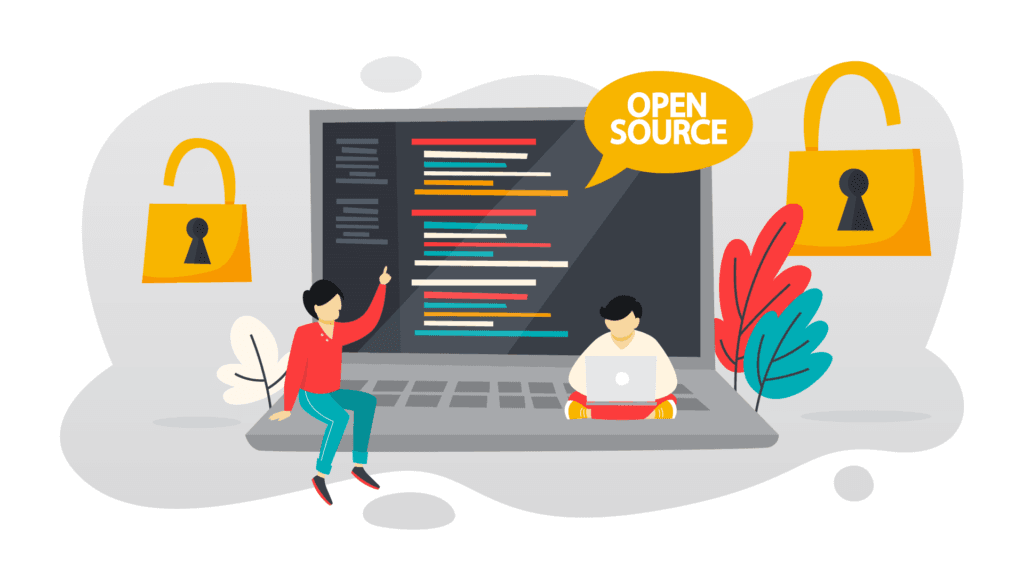
Free Open Source Solutions
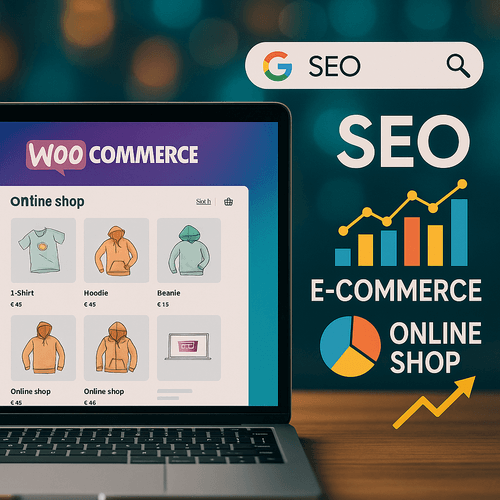
Open source software is a type of software where the source code can be freely copied, modified, enhanced, and distributed without any licensing fees. Many business owners choose this route for their online stores, most commonly utilizing platforms such as WooCommerce, PrestaShop, or Magento. The undeniable advantages of open source technology include cost-effectiveness, a wide range of features, scalability, and an extensive community of users who actively support each other in troubleshooting. This solution allows for the creation of both small boutiques and large-scale stores with high product volumes and heavy traffic.
However, it is important to note that as your requirements grow, this solution can become significantly more expensive and requires specialized programming skills.
Ready-made Platforms (SaaS)
True to their name, these options require the least amount of involvement on your part. You simply pay for the setup and the ongoing operation of your online store, leaving the heavy lifting to the service provider.
Well-known providers in this space include Shopify and Shoper. However, choosing this route comes with several limitations:
Functional Limitations: Ready-made platforms often have functional constraints, which can make it impossible to tailor the store to more complex client needs and requirements.
Lack of Code Control: These platforms typically operate in a “closed environment,” meaning developers do not have access to the source code and cannot modify it.
Performance: Ready-made platforms may sometimes lack sufficient performance, leading to issues with page load speeds and the handling of large amounts of data.
Pricing: Some platforms charge fees that are disproportionately high relative to the features and capabilities provided.
Owning a custom platform involves a generally higher financial investment, both at the start and later on regarding its maintenance. Due to the costs and the time-consuming nature of such a venture, this option is recommended only for highly non-standard e-commerce projects.Custom Software (Premium Version)
What else should you keep in mind?
Other key factors to consider:
With your store’s online visibility in mind, you should ensure that your e-commerce platform is as SEO-friendly as possible. What does this mean? In a nutshell, it involves meeting the requirements of the Google search engine, which deploys bots to evaluate the substantive and technical value of all websites. Based on this assessment, Google determines the ranking of these pages for specific keywords (depending on the search query). It is crucial that your e-commerce site can be easily optimized in accordance with these requirements to appear as high as possible on the search engine results pages (SERPs). Check out our SEO services to help you achieve growth in search rankings.
Responsiveness
This is about properly adapting your platform so that it displays and functions correctly across all devices your customers use when making purchasing decisions—namely smartphones, tablets, and, of course, desktops (stationary computers and laptops).
Editing Without Programming Knowledge
You can choose a platform that allows you to make changes and modifications via an admin panel without any knowledge of programming languages. Both WooCommerce and PrestaShop offer this type of functionality.
Future-Proofing and Scalability
It is worth investing in a scalable solution that won’t require drastic changes as your business grows. Such a solution will allow you to easily expand your product range or implement other modifications in response to growing market demands.
Costs of Running Your Own Online Store
You’ve already familiarized yourself with the core concepts and everything you need to launch your own e-commerce business. Now, it’s time to look at the costs involved. We would be happy to prepare a personalized quote for the creation of your online store.
Basic Costs:
Hosting – depending on your needs. Prices for the most basic plans start at around 25 euro per year.
Domain – although you may find offers with the first year or two for free, this can prove to be a poor long-term solution. Read the terms and conditions carefully.
Digital Marketing – the key piece of the puzzle. A well-planned marketing strategy will give your site the necessary “kickstart” and quickly drive traffic to your online store. Unfortunately, it can be costly. Prices depend on individual arrangements and strategies, as well as whether you choose to hire in-house specialists or use external marketing agencies.
Partnership with an IT Company – unless your online store is just a very small “side hustle,” professional assistance will be essential at several key stages. After implementing the entire e-commerce infrastructure, such a company will oversee your store to ensure everything runs flawlessly. (webcrafters.pl)
Final tips before you launch your e-commerce business
Prepare Product Descriptions
Product descriptions offer a twofold benefit. They help customers make informed purchasing decisions while simultaneously allowing you to boost your website’s ranking in organic search results (Google or other search engines) by incorporating strategic keywords.
What you should include in your descriptions:
- Basic information – name, model, and brand.
- Unique and catchy copy – integrated with relevant keywords.
- Shipping information – delivery times and costs.
- High-quality imagery – a clear photo or a series of images that represent the product’s actual appearance as accurately as possible.
Payment Methods and Delivery
- Payments – providing customers with their preferred payment method is a key to success. You want to avoid a situation where a high-intent customer picks a product but abandons their cart because they can’t find a convenient way to pay. Therefore, the wider the range of payment options—such as BLIK, PayPal, etc.—the better. While integrating these systems into your online store involves certain fees, the benefits they provide make it a highly worthwhile investment.
- Delivery – the same principle applies here. The more delivery options you offer, the higher the chance of completing a sale. Additionally, you should pre-determine key details such as international shipping, free delivery thresholds (a very effective marketing tactic), and order fulfillment times.
UX — How to Simplify the Customer’s Purchasing Decision
UX, or User Experience, is a design approach where user satisfaction is the most important metric. In this context, it refers to all interactions between the user and your online store.
What do you need to take care of?
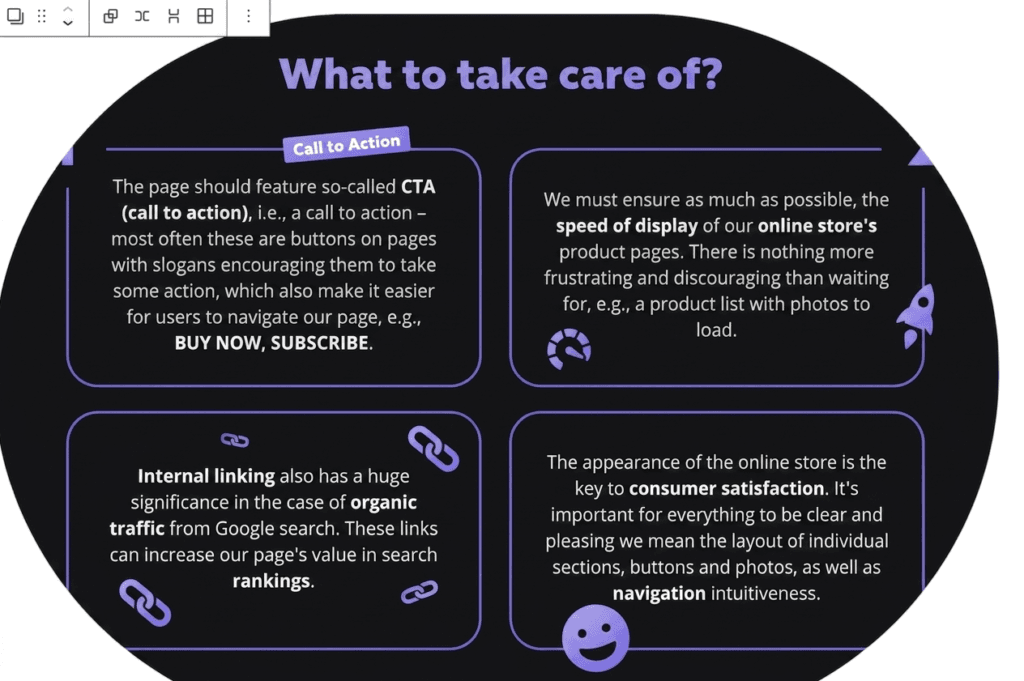
Above, we have listed only a few fundamental aspects of User Experience. More advanced improvements of this type will become possible later, once your e-commerce business reaches a higher stage of development.
E-commerce vs. Marketing: SEO, Social Media, and Google Ads?
To launch your sales, you first need to build brand awareness, which requires consistent digital marketing efforts. It’s best not to cut corners on your marketing budget, as this is what drives traffic to your site, turns visitors into customers, and ultimately increases your revenue.
- Organic Traffic and SEO – we’ve mentioned this before. A well-executed SEO strategy can yield numerous benefits with a relatively small financial investment. However, keep in mind that results can sometimes take a while to appear—especially when compared to paid campaigns.
- Social Media – these platforms allow you to increase brand awareness and are also highly effective for promoting specific products.
- Google Ads (Paid Advertising) – this method delivers almost immediate results because it directly addresses users’ purchasing intent. We would be happy to help you set up your Google Ads campaigns! Typically, it only takes a few days to see tangible benefits.
Summary
As you can see, setting up an online store involves numerous processes that must be addressed as early as the strategy-building stage. Once the store is launched, ongoing IT support for e-commerce is also essential. In addition to the factors described above, legal matters play a vital role. We haven’t covered them in this article, as the topic is so extensive that it deserves its own dedicated publication. However, we hope we have answered your basic questions regarding online store creation.
We wish you plenty of high-intent customers!


More than 9 years on the market, hundreds of successful projects
Most of our clients hire us because they need a new online store. However, they stay with us because they find in WebCrafters a reliable technology partner, supporting them comprehensively from the tech side.
We are not a software house. We are your outsourced IT department that will take care of your business just like an in-house team of programmers, designers, and project managers would.
Build your new product with us!
Make an appointment for a free consultation with an expert and let's talk
about your expectations.
Write to us!
Or call

Mateusz Lenicki
CEO
Phone: +48 510 775 352
Email: [email protected]